About this collection
Best DTF Transfers for Your Apparel Project
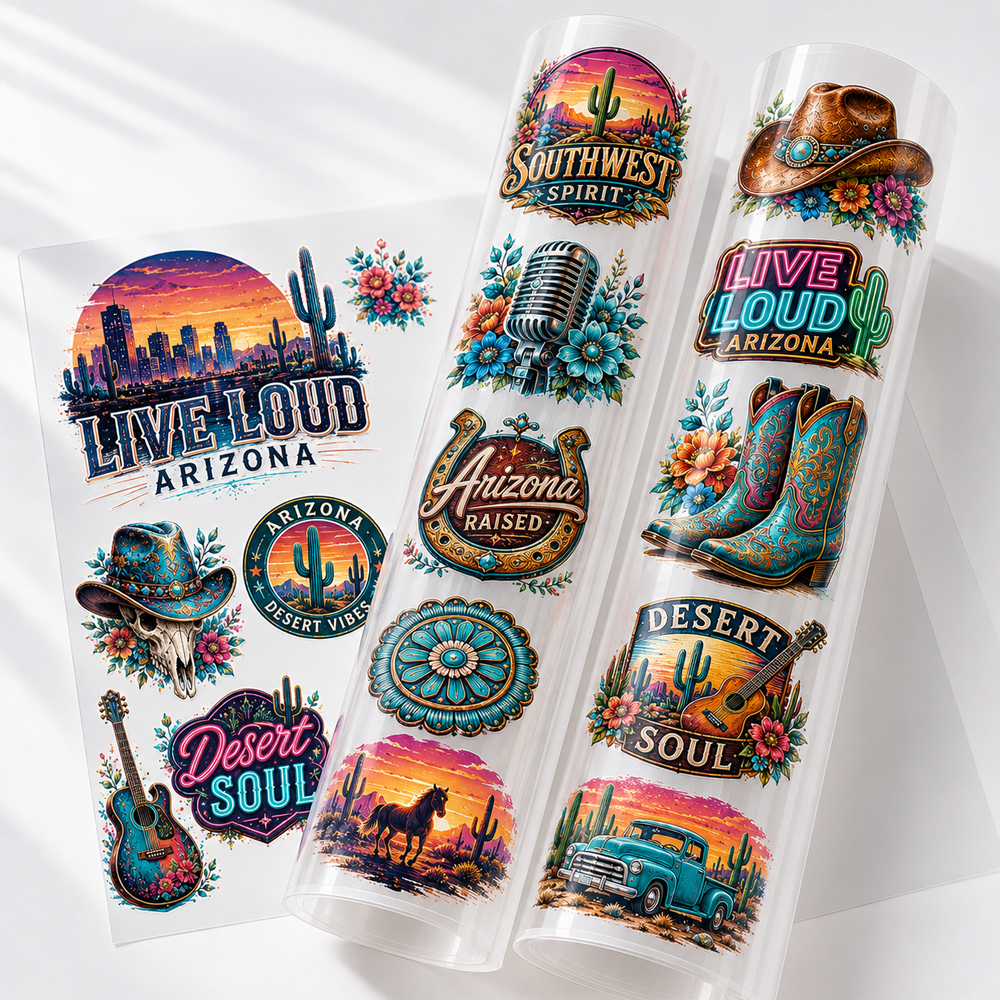
Choosing the best DTF transfers starts with your artwork, garment and order format. Compare custom apparel transfers by size, upload a finished sheet or arrange designs online, then check compatibility before producing a larger batch. DTF transfers are printed designs prepared for heat application to a garment; the exact application method depends on the specific transfer instructions.
What to Check Before Ordering
- Artwork detail: Review sharp edges, readable lettering and transparency at the intended print size.
- Garment compatibility: Check the fabric, coating and heat tolerance against the transfer instructions.
- Application: Follow the supplied temperature, pressure, time and peel guidance for your specific product.
- Finished result: Evaluate appearance, feel and adhesion on a test garment. Follow care instructions when checking wash performance.
Color, Fabric and Quality Checks
Review artwork color and contrast at the final print size before ordering. Screen colors and the finished garment may not look identical, so assess the transfer on the fabric you plan to use. Cotton garments may be suitable for some DTF transfers, but fabric composition, garment finish and heat tolerance vary. Check the product instructions and test a representative garment rather than assuming one setting or result will work for all materials.
For a quality check, inspect fine details, edges and the applied design after following the product's instructions. A small test can help your team assess the appearance and feel before committing to a larger production run.
Choose Your Ordering Format
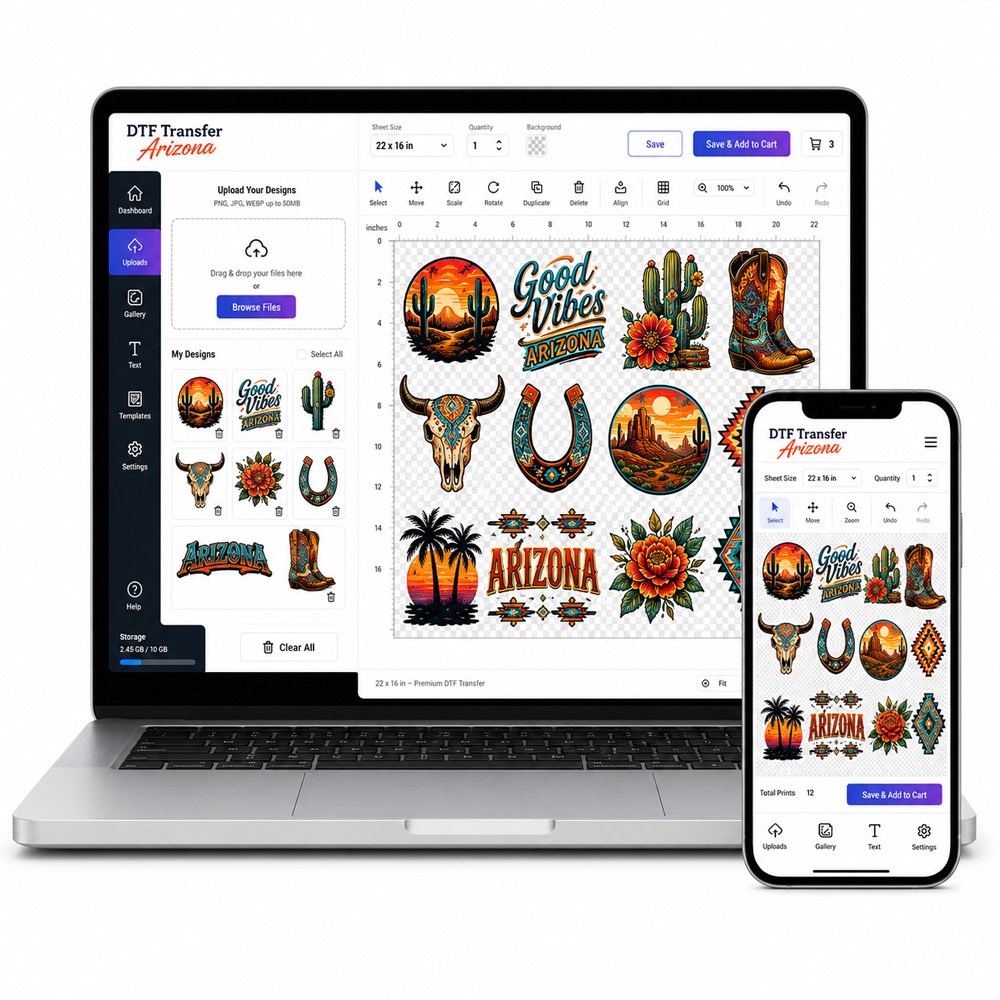
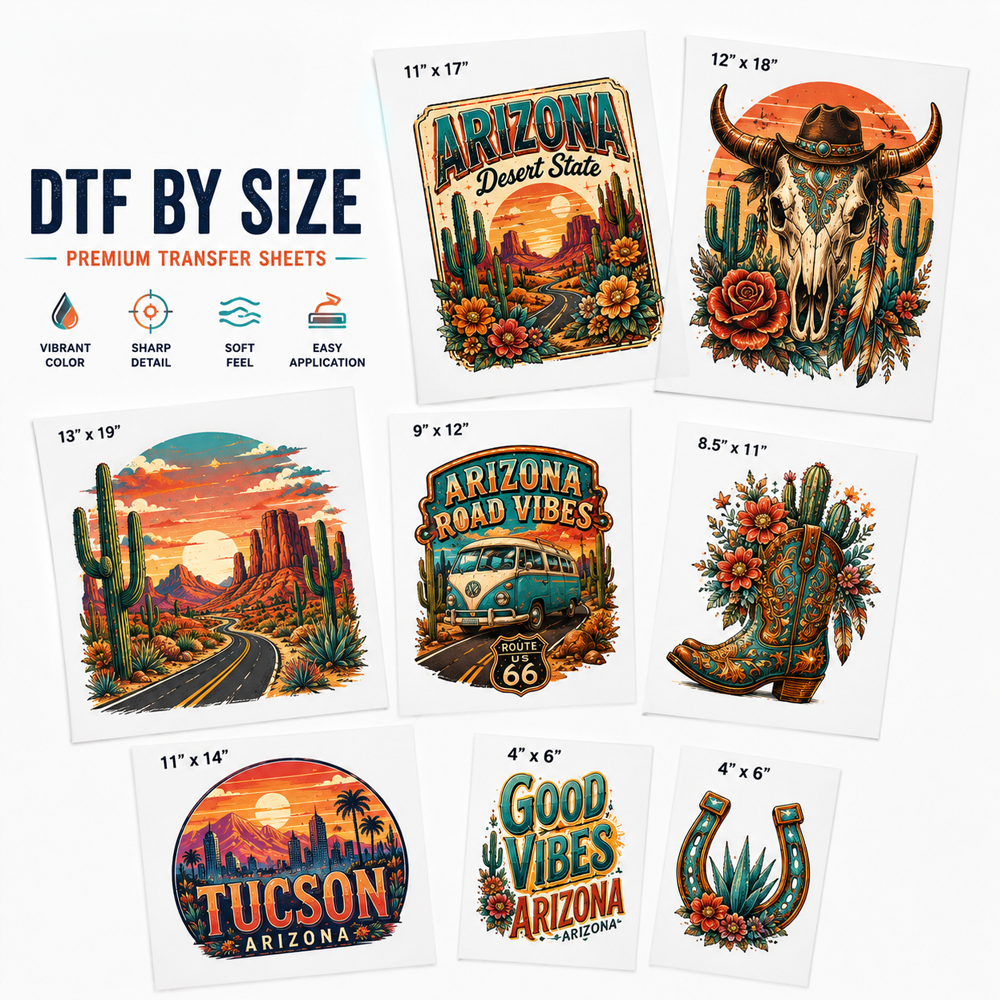
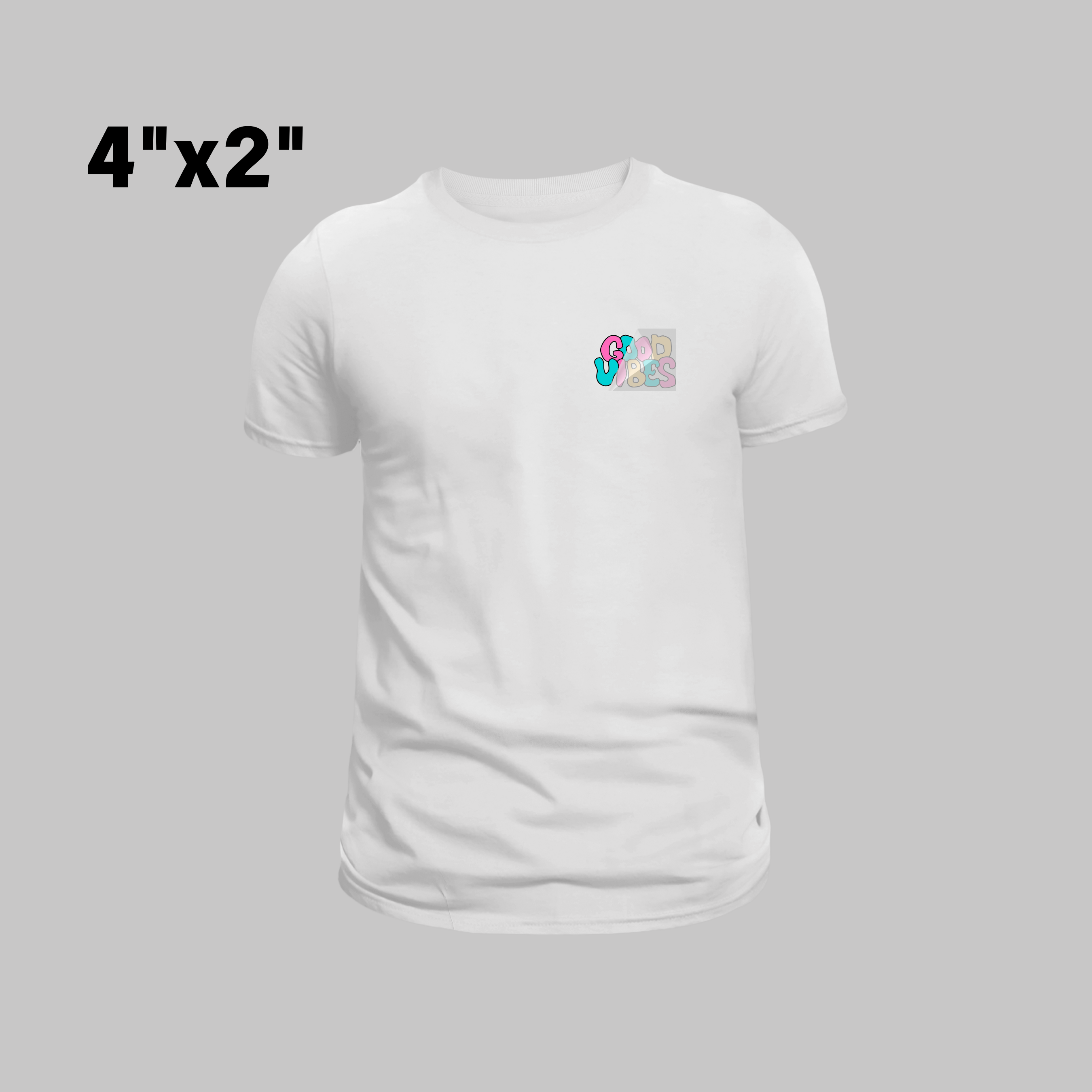
For individual graphics, select DTF transfers by size. Use gang sheet printing when you already have a prepared layout, or open the online layout builder to arrange separate designs.
Compare dimensions and quantities before judging total cost. Include unused sheet space, garment testing and delivery in your project planning. A larger sheet is useful only when its layout fits the graphics you actually need. For apparel projects involving different garment types, plan a test for each relevant fabric and application setup.
Heat Press Application
A heat press is commonly used to apply DTF transfers, but the required temperature, pressure, application time and peel method are product-specific. Follow the instructions supplied with the transfer and use suitable equipment and a compatible garment. Do not rely on a single setting for every transfer or fabric; verify the result with a test before a larger run.
DTF Transfers for Work and Production
For resellers, print shops, schools and other organizations preparing apparel, choose an ordering format that matches the artwork and the way your team produces garments. Organizing designs by garment, size and production batch can help the team check artwork and application requirements. No single transfer format or fabric choice works for all projects, so confirm the details for the specific order.
Test Before a Larger Run
Explore our Sample DTF Pack to assess transfers on your own suitable garment. Check the product listing for current contents and availability.
For local orders, review Phoenix pickup information and wait for your collection notification. Our ordering guide explains artwork and layout preparation. You can also find our Phoenix pickup location.
DTF Transfer FAQs
What exactly is a DTF transfer?
A DTF (direct-to-film) transfer is a printed design prepared to be applied to a garment using heat. Follow the instructions for the specific transfer to determine application and peel steps.
Can a Cricut do DTF transfers?
A Cricut cutting machine is not a DTF printer. If you already have a finished DTF transfer, check its instructions and use compatible heat-application equipment; a Cricut alone does not print DTF transfers.
Which is better, DTF or sublimation?
Neither method is best for every project. The right choice depends on the garment, artwork and production requirements. Check fabric compatibility and the specific application instructions before choosing a method.
Can I print my own DTF transfers?
Printing DTF transfers yourself requires suitable printing equipment, materials and a process configured for DTF. If you do not produce transfers in-house, choose an ordering format that fits your artwork and review the product details before ordering.
Best DTF Transfers
Filter
Sort by: